
The TRUE Story of Mac & Cheese | America's Favorite Comfort Food
20 min
Prep
45 min
Bake
8
Makes
- 1 lb elbow macaroni or cavatappi
cooked to very al dente, still firm
- 2 cups shredded sharp cheddar
white or yellow, your preference
- 1 cup shredded Gruyere or Colby
adds depth
- 1 cup shredded Monterey Jack
for melt
- 1 1/2 cups whole milk
- 1 can (12 oz) evaporated milk
the Southern secret — adds creaminess
- 2 large eggs
- 4 tbsp unsalted butter
plus more for pan
- 1 1/2 tsp salt
- 1/2 tsp black pepper
- 1/2 tsp mustard powder
- 1/4 tsp paprika
for top
- 1
Preheat oven to 350°F. Butter a 9x13-inch baking dish. Cook pasta to very al dente (2 minutes less than package directions) — it will finish cooking in the oven.
- 2
In a large bowl, whisk together both milks, eggs, salt, pepper, and mustard powder until smooth. This is your custard base.
- 3
Combine the shredded cheeses in a bowl. Reserve 1 cup of the cheese mixture for the top.
- 4
In the baking dish, layer half the drained pasta. Scatter half the cheese mixture over it. Dot with half the butter. Add the remaining pasta and cheese.
- 5
Pour the milk-egg custard evenly over the pasta. Gently press the pasta down so it is mostly submerged.
- 6
Top with the reserved 1 cup of shredded cheese. Sprinkle paprika over the top.
- 7
Bake uncovered for 40-45 minutes until the top is golden and bubbling at the edges. The custard should be set — it will jiggle slightly in the center but not slosh.
- 8
Let rest 10 minutes before serving. The custard continues to set as it cools slightly.
Baker's Notes
Undercook the pasta — it absorbs liquid in the oven. The evaporated milk is not optional in this recipe; it is what creates that specific Southern creaminess. Do not use pre-shredded cheese — the anti-caking powder prevents proper melting.
Original: Southern baked macaroni and cheese, custard style, 1880
Mac and Cheese: The Dish Thomas Jefferson Almost Didn't Ruin
Macaroni and cheese is a 2.1-billion-dollar industry in the United States. Americans eat approximately 1.8 million boxes of Kraft Mac & Cheese per day. It is the most popular grocery item in many American households and the default answer when someone needs to feed children something they'll actually eat. Its origin story involves Thomas Jefferson, an Italian palace, enslaved people, and one of the longest journeys from elite European dish to American comfort food in culinary history.
The Italian Beginning
Pasta baked with cheese is not an American invention — not even close. Dishes combining pasta and cheese appear in Italian and British cooking records dating to the 14th century. A recipe called de lasanis from the 14th century Italian cookbook Liber de Coquina describes small squares of pasta mixed with grated cheese and spices. Northern Italian cooking, particularly in Emilia-Romagna (the home of Parmesan cheese), developed rich pasta dishes baked with cheese and cream that formed the direct ancestor of what we call macaroni and cheese.
By the 17th and 18th centuries, maccheroni al formaggio (macaroni with cheese) was a fashionable dish in aristocratic English and European cooking. The English upper classes had developed a fascination with Italian cuisine, and "macaroni" became a shorthand for a certain kind of affected, European-influenced sophistication. This is, improbably, the origin of the line "stuck a feather in his cap and called it macaroni" in Yankee Doodle — the feather-wearing was a reference to Italian-influenced affectation, a mockery of colonial Americans trying to seem cultured.
Thomas Jefferson and the Macaroni Machine
Thomas Jefferson first encountered macaroni in France, where he served as American minister from 1784 to 1789. He was an obsessive food tourist — in France and later in Italy, he ate constantly and took detailed notes. He encountered macaroni in various forms and was impressed enough that he made a detailed sketch of a macaroni-making machine he saw in Naples, attempting to replicate it back in America.
Jefferson imported macaroni from Europe and served a macaroni pie at a White House dinner in 1802. The dish was noted by guests as unusual and elegant. His enslaved chef James Hemings, who had been trained in French cooking during Jefferson's time in Paris, almost certainly prepared and refined the dish for these dinners.
The role of James Hemings — and the broader contribution of enslaved African American cooks to American culinary history — cannot be overstated here. Hemings was trained at elite Parisian restaurants at Jefferson's direction, becoming one of the most skilled French-trained chefs in America at the time. He was enslaved. Jefferson promised to free him if he trained another cook, which Hemings did. Jefferson freed him in 1796. Hemings died in 1801, a year before the White House macaroni dinner. The dish that Jefferson is celebrated for introducing to America was prepared and perfected by a man whose name history barely preserved.
From Aristocratic Novelty to Mass Consumption
Through the 19th century, macaroni and cheese remained a dish of the American upper and middle classes. Recipes for baked macaroni with cheddar cheese appeared in American cookbooks throughout the 1800s. Mrs. Lincoln's Boston Cook Book (1883) has a recipe nearly identical to what we would recognize today: cooked macaroni, layered with butter, cheese, and cream, baked until bubbling.
The transformation into everyman food happened in two stages. First, dried pasta became cheap and widely available through industrial production in the late 19th century. Second — and most dramatically — Kraft Foods introduced its boxed macaroni and cheese dinner in 1937, during the Great Depression. The product cost 19 cents, required only a pot of water, and could feed a family of four. In its first year, Kraft sold eight million boxes. It was a historic commercial success built on economic desperation, and it permanently shifted the cultural identity of the dish from refined baked pasta to quick family dinner.
The Baked vs. Stovetop Divide
Modern American mac and cheese exists on a spectrum. On one end is the Kraft box — stovetop, fast, using processed cheese powder dissolved in butter and milk. On the other is the Southern baked mac and cheese — a combination of multiple cheeses, eggs, and evaporated milk, baked until a custard forms around the pasta and the top caramelizes to a sharp golden crust.
Southern baked mac and cheese — particularly in Black American culinary tradition — is a fundamentally different dish from the boxed version. It appears at holidays, church dinners, and family gatherings as a serious side dish. The custard technique (eggs whisked into the cheese sauce) transforms it from a pasta dish into something closer to a savory casserole. It is rich, dense, and unmistakably homemade.
Both versions have their place. The boxed version is a piece of American Depression-era history in a box. The baked version is the dish Thomas Jefferson would recognize, filtered through 200 years of American cooking into something entirely its own.
Primary Sources
- –Michael Twitty. “The Cooking Gene” (2017)
- –Andrew F. Smith. “The Oxford Encyclopedia of Food and Drink in America” (2004)
- –Jessica B. Harris. “High on the Hog” (2011)
You just learned the history.
Now make it From Scratch.
Every dish I document, I cook. Below are the exact tools, cookware, and ingredients I used to bring this recipe to life — sourced, tested, and trusted. No guesswork.
The full recipe, 2,000-word history essay, step-by-step photos, and a printable PDF are all waiting for you at alexanderdeyo.com/from-scratch. When you shop through these links, you support the series at no extra cost.

Breville Handy Mix Scraper Hand Mixer

Staub Cast Iron Braiser — Baked Mac Vessel
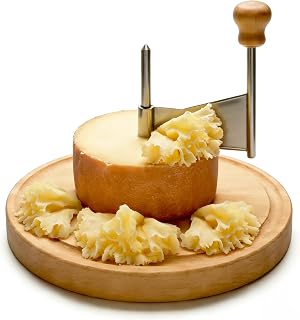
Gruyère Cheese Wheel

Box Grater for Cheese
As an Amazon Associate, From Scratch earns from qualifying purchases.
Every meal has a story.
New episodes, 2,000-word food histories, and tested recipes delivered to your inbox. Free forever.
No spam. Unsubscribe anytime.
From Scratch by Alex Deyo