
The TRUE Story of Johnny Cakes | America's Colonial Survival Food
5 min
Prep
20 min
Bake
4
Makes
- 1 cup stone-ground white or yellow cornmeal
coarse stone-ground is correct — not fine corn flour
- 3/4 cup boiling water
pour hot over cornmeal first
- 1/4 cup buttermilk or whole milk
add after the hot water step
- 1/2 tsp salt
- 1 tsp sugar
optional — purists skip it
- 2 tbsp lard, bacon fat, or butter
for the griddle
- 1
In a bowl, combine cornmeal and salt. Pour the boiling water over it and stir immediately. The cornmeal will absorb the hot water and begin to swell. Let it sit 2 minutes.
- 2
Stir in the buttermilk or milk. The batter should be thick but spreadable — about the consistency of thick oatmeal. If too stiff, add a tablespoon more liquid.
- 3
Heat a cast iron griddle or skillet over medium-high heat until it is properly hot — a drop of water should dance and evaporate immediately.
- 4
Add the fat to the griddle and swirl to coat. Scoop 3-tablespoon portions of batter and press them gently into rounds about 3 inches wide and 1/4 inch thick.
- 5
Cook without moving for 4-5 minutes. The cakes are ready to flip when the edges look dry and set and the bottom is golden brown and pulling away from the griddle slightly.
- 6
Flip and cook the second side for 3-4 minutes. The second side will not be as crispy as the first — that is correct. Serve immediately.
Baker's Notes
Stone-ground cornmeal matters here. The fine, pre-ground variety in most grocery stores will produce a cake without character. The coarser grind gives you the grainy, nutty texture that defines this dish. Serve with butter, honey, or maple syrup — or nothing at all.
Original: Rhode Island and Southern colonial corn cake tradition, 1720
Johnny Cakes: The Flatbread That Walked Across America
Before pancakes, before waffles, before the American breakfast as we now know it, there were johnny cakes. Flat rounds of cornmeal batter cooked on a griddle or hot stone, they were the original fast food of the American frontier — portable, quick to make, and requiring nothing more than a fire, some cornmeal, and water. The story of how they fed this country is as straightforward and unadorned as the cakes themselves.
The Name and the Confusion
The name "johnny cake" is contested and has been for centuries. One origin story traces it to "journey cake" — a corruption of the name given to a flat cornmeal cake that could be wrapped and taken on a journey, surviving for days in a saddlebag. Another theory points to "Jonakin" cakes, a New England term whose own origin is unclear. Some historians argue the name derives from "Shawnee cakes," a reference to the Shawnee people whose corn-cooking traditions influenced early American frontier food.
The name confusion reflects a broader truth: this was a dish that crossed linguistic and cultural boundaries so fluidly that its provenance got scrambled along the way. What everyone agrees on is that it is old, it is built on corn, and it was everywhere.
Native American Corn Cooking as the Foundation
Every version of the johnny cake traces back to the same source: the corn-grinding and corn-cooking traditions of the Native nations of eastern North America. The Narragansett people of what is now New England ground dried corn into a coarse meal and mixed it with water to form a simple flat cake called nokehick or nokake. This could be eaten as a dry cake or cooked on a stone. It was trail food, winter food, and everyday food.
European settlers in New England, Virginia, and throughout the eastern seaboard encountered variations of this dish in nearly every region they entered. The technical barriers to making it were essentially zero: corn grew easily, grinding stones were available, and cooking on a flat rock or griddle required no specialized equipment. It spread across the colonies because it was the perfect accessible food for people with almost nothing.
The New England Version vs. The South
By the colonial period, distinct regional johnny cake traditions had emerged. New England johnny cakes — particularly those associated with Rhode Island — used white flint cornmeal, a variety with a distinctive fine texture and slightly nutty flavor. Rhode Island johnnycakes (spelled without the space in the state's tradition) became almost a point of local pride, made with nothing but stone-ground white cornmeal, boiling water, salt, and lard, cooked on a heavy griddle until the edges crisped.
In the American South, the johnny cake evolved in parallel with the larger corn-cooking traditions of the region. Versions used yellow cornmeal, sometimes with buttermilk for tang, and were cooked thicker on cast iron. The line between a johnny cake, a corn cake, and a hoecake (a cake originally cooked on the blade of a hoe over an open fire) blurred depending on who was cooking and where.
The hoecake deserves its own mention as a piece of American culinary history. Enslaved people in the South, working in fields with no access to a kitchen, cooked cornmeal cakes on the flat iron blade of a hoe held over an open fire. It is one of the most direct connections between the history of American labor and the food that sustained it. George Washington is documented to have been fond of hoecakes for breakfast — a dish that he ate in comfort that the people who made it ate from necessity.
Johnny Cakes in the American West
As settlers moved west through the 18th and 19th centuries, the johnny cake went with them. Lewis and Clark's Corps of Discovery ate corn cakes throughout their journey. Pioneer families on the Oregon and Santa Fe trails relied on cornmeal as one of their primary carbohydrate sources — lightweight, shelf-stable, and adaptable. A day's march on a 19th century trail might end with nothing more than a johnny cake fried in a skillet over a campfire.
The dish adapted to whatever was available. Where buttermilk was accessible, it went in. Where only water was available, water sufficed. Where a skillet was too heavy to carry, the cakes were cooked on heated flat rocks. The recipe bent around circumstance.
The Simplest Version and Why It Works
The honest version of a johnny cake is almost offensively simple: cornmeal, salt, water (or milk), and fat for the griddle. That's it. The key is heat — the griddle must be hot enough to create a crust before the cake can stick. The first side gets crispy; the second side follows. The texture is somewhere between a pancake and a thin corn tortilla, with a slightly grainy interior and a crisp exterior that only cast iron or a well-seasoned griddle can properly create.
The Rhode Island version uses boiling water, which begins to cook and gelatinize the starch in the cornmeal before the cake hits the pan — creating a slightly different texture than cold-water versions. Both are worth making.
Primary Sources
- –Michael Owen Jones. “Corn: A Global History” (2017)
- –Linda Murray Berzok. “American Indian Food” (2005)
- –Ronni Lundy. “Victuals: An Appalachian Journey” (2016)
You just learned the history.
Now make it From Scratch.
Every dish I document, I cook. Below are the exact tools, cookware, and ingredients I used to bring this recipe to life — sourced, tested, and trusted. No guesswork.
The full recipe, 2,000-word history essay, step-by-step photos, and a printable PDF are all waiting for you at alexanderdeyo.com/from-scratch. When you shop through these links, you support the series at no extra cost.

Anson Mills Antebellum Coarse White Cornmeal
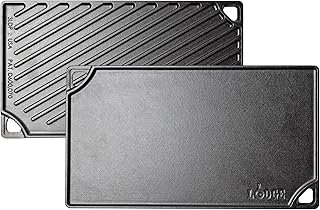
Lodge Cast Iron Griddle

Molasses (Blackstrap, Unsulfured)

Colonial American Cooking: Historic Recipes
As an Amazon Associate, From Scratch earns from qualifying purchases.
Every meal has a story.
New episodes, 2,000-word food histories, and tested recipes delivered to your inbox. Free forever.
No spam. Unsubscribe anytime.
From Scratch by Alex Deyo