
The TRUE Story of New England Clam Chowder | America Through Food
20 min
Prep
40 min
Bake
6
Makes
- 4 strips thick-cut bacon or salt pork
diced — salt pork is traditional but bacon works
- 1 large yellow onion
diced
- 2 stalks celery
diced
- 2 cloves garlic
minced
- 1.5 lbs Yukon Gold potatoes
peeled, cut into 1/2-inch cubes
- 2 cups clam juice or bottled clam broth
- 2 cups whole milk
- 1 cup heavy cream
- 2 cans (6.5 oz each) chopped clams
with their liquid — or 2 lbs fresh quahogs, shucked and chopped
- 2 bay leaves
- 4 sprigs fresh thyme
- to taste salt and white pepper
- 2 tbsp unsalted butter
for finishing
- 2 tbsp fresh chives or parsley
for garnish
- 1
In a heavy pot over medium heat, cook diced bacon until crispy. Remove and reserve. Pour off all but 1 tablespoon of fat.
- 2
In the bacon fat, cook onion and celery over medium heat until softened, about 5 minutes. Add garlic and cook 1 minute.
- 3
Add potatoes, clam juice, bay leaves, and thyme. Add enough water to just cover the potatoes (about 1 cup). Bring to a boil, then reduce to a simmer. Cook 15-18 minutes until potatoes are completely tender.
- 4
Remove bay leaves and thyme sprigs. Use the back of a spoon to gently crush about 1/4 of the potatoes against the side of the pot — this thickens the chowder naturally.
- 5
Add milk and cream. Bring to a gentle simmer — do not boil, as dairy can break at high heat.
- 6
Add clams and their liquid. Simmer very gently for 5 minutes. Do not boil — overcooked clams turn rubbery.
- 7
Remove from heat. Stir in butter. Season aggressively with salt and white pepper. Taste — it will need more salt than you expect.
- 8
Ladle into warm bowls. Top with reserved bacon and fresh chives. Serve with oyster crackers or crusty bread.
Baker's Notes
Do not add flour. The crushed potatoes and the starch they release thicken this properly without turning it into paste. Chowder is always better the next day — the flavors meld overnight. Reheat gently; never boil.
Original: Traditional New England clam chowder, 19th century style, 1840
Clam Chowder: The New England Coast's Greatest Argument
There are at least four distinct American chowders, and partisans of each will tell you the others are wrong. New England clam chowder is cream-based and white. Manhattan clam chowder is tomato-based and red. Rhode Island clam chowder is broth-based and clear. And there is a camp that argues any addition of tomatoes to a chowder is an act of culinary violence so severe it was once the subject of a proposed Maine state law making it illegal.
This is not a small argument. It has been going on for over a hundred years. It gets at something real about regional identity, the politics of immigration, and the way food absorbs history.
What Chowder Actually Is
The word "chowder" likely derives from the French chaudière — a large kettle or cauldron used by fishermen. French fishing boats operating off Newfoundland and the Canadian Maritimes in the 16th and 17th centuries made communal pots of fish stew from their catch. The sailors who brought this technique to the New England coast were likely a mix of French, English, and Channel Island fishermen.
New England chowder developed in the port towns and fishing communities of Massachusetts, Maine, Connecticut, and Rhode Island through the 18th century. The basic structure — salt pork, onion, potatoes, clams, and liquid — was established by the mid-1700s. What the liquid was varied: water, fish stock, or milk. The cream-based version that became iconic required access to dairy, which fishing communities along the coast had through trade with farming communities inland.
By the early 19th century, New England clam chowder was well-documented as a regional dish. A recipe published in the Boston Evening Post in 1751 describes a chowder made with clams, salt pork, onions, and biscuits — no potatoes (which came later as they became more common) and no dairy.
The Manhattan Intervention
The tomato-based Manhattan chowder arrived in the late 19th century, driven by the wave of southern and eastern European immigrants — particularly Italians — who settled in New York and brought with them a culinary tradition built on tomatoes. Italian immigrants along the New York waterfront took the clam chowder template they encountered and replaced the cream with tomatoes, creating something that is genuinely different in flavor, texture, and character from the New England original.
New Englanders have never entirely forgiven this. The tomato clam chowder debate has generated newspaper editorials, state legislative discussions, and the kind of sustained regional defensiveness usually reserved for sports teams.
The Potato Question
Today's New England clam chowder is thick with potato — so much so that many versions are closer to a stew than a soup. The potato's arrival in chowder recipes in the mid-19th century was partly practical (potatoes were cheap, filling, and grew abundantly in New England) and partly about texture. The starch from cooked potatoes contributes to the body of the chowder in a way that changes it from a thin soup to something more substantial.
The question of how thick chowder should be is also contested. Traditional chowder was thinner than what most restaurants serve today. The gluey, paste-like chowder served in tourist restaurants in Boston Harbor is not historically authentic — it is the result of adding flour as a thickener, a practice that traditionalists reject.
The Clams
Quahog clams (Mercenaria mercenaria) — a large, hard-shelled clam native to the Atlantic coast — are the traditional chowder clam. They have more flavor than smaller clams but are tougher, making them well-suited to the long cooking that chowder involves. Fresh quahogs, shucked and chopped, produce a better chowder than canned clams, but the difference is smaller than purists claim. The clam juice — or liquor — that comes with fresh or canned clams is essential to the flavor and should never be discarded.
Primary Sources
- –Kathy Neustadt. “Clambake: A History and Celebration of an American Tradition” (1992)
- –Andrew F. Smith. “The Oxford Encyclopedia of Food and Drink in America” (2004)
- –Marion Cunningham. “The Fannie Farmer Cookbook” (1979)
You just learned the history.
Now make it From Scratch.
Every dish I document, I cook. Below are the exact tools, cookware, and ingredients I used to bring this recipe to life — sourced, tested, and trusted. No guesswork.
The full recipe, 2,000-word history essay, step-by-step photos, and a printable PDF are all waiting for you at alexanderdeyo.com/from-scratch. When you shop through these links, you support the series at no extra cost.

Clam Juice (Bottled, Case)

Chopped Clams in Clam Juice (Canned, Case)
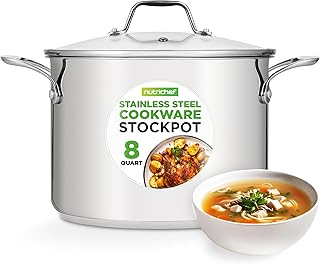
Heavy Duty Soup Pot (8 Qt)

Oyster Crackers (Westminster, Large Bag)
As an Amazon Associate, From Scratch earns from qualifying purchases.
Every meal has a story.
New episodes, 2,000-word food histories, and tested recipes delivered to your inbox. Free forever.
No spam. Unsubscribe anytime.
From Scratch by Alex Deyo