
How a British Recipe Became the Most American Symbol in History — The Truth About Apple Pie
How a British Recipe Became the Most American Symbol in History — The Truth About Apple Pie
45 min
Prep
1h
Bake
8
Makes
- 2 1/2 cups all-purpose flour
for the crust
- 1 cup (2 sticks) unsalted butter
very cold, cubed
- 6-8 tbsp ice water
- 1 tsp salt
for crust
- 1 tbsp sugar
for crust
- 3 large Granny Smith apples
peeled, cored, sliced thin
- 3 large Honeycrisp or Braeburn apples
peeled, cored, sliced thin
- 3/4 cup granulated sugar
for filling
- 2 tbsp brown sugar
for filling
- 1 1/2 tsp cinnamon
- 1/4 tsp nutmeg
- 2 tbsp cornstarch
thickens the filling
- 1 tbsp lemon juice
- 1 egg
beaten, for egg wash
- 1 tbsp coarse sugar
for topping
- 1
CRUST (make at least 1 hour ahead, ideally the night before): Whisk flour, salt, and sugar. Add cold cubed butter and work in with your fingertips until pea-sized crumbs form. Add ice water 1 tablespoon at a time, tossing with a fork, until dough just comes together. Divide in two discs, wrap in plastic, refrigerate minimum 1 hour.
- 2
Peel, core, and slice apples into 1/4-inch slices. Toss with both sugars, cinnamon, nutmeg, cornstarch, and lemon juice. Let sit 30 minutes — the apples will release juice.
- 3
Preheat oven to 400°F. Place oven rack in lower third of oven.
- 4
Roll one disc of dough on a floured surface to a 12-inch circle. Fit into a 9-inch pie pan. Trim edges leaving a 1/2-inch overhang.
- 5
Pour apple filling into the shell, mounding slightly in the center. Dot with 2 tablespoons butter if desired.
- 6
Roll second disc to a 12-inch circle. Lay over filling. Fold the top edge under the bottom edge and crimp to seal. Cut 4-6 steam vents in the top crust.
- 7
Brush top crust with egg wash. Sprinkle with coarse sugar.
- 8
Bake at 400°F for 20 minutes, then reduce to 375°F and bake another 40-45 minutes until crust is deep golden brown and filling is bubbling through the vents. If edges brown too fast, cover with foil strips.
- 9
CRITICAL: Cool at least 2 hours before cutting. The filling needs to set. Cutting a hot pie gives you apple soup.
Baker's Notes
The secret is cold everything for the crust and patience for the cooling. Use a mix of apple varieties — all Granny Smith is too tart; all Honeycrisp is too sweet and too soft. The combination gives you tartness, sweetness, and different textures.
Original: 19th century American double-crust apple pie, 1870
The TRUE Story of Apple Pie: How a British Recipe Became America's Most Powerful Symbol
"As American as apple pie." It's one of the most durable phrases in the American vocabulary. Politicians invoke it. Advertisers deploy it. It's shorthand for something essential, something original, something authentically American. The only problem with it is that apple pie is not originally American. Not even close.
Where It Actually Comes From
The first recorded apple pie recipe was published in England in 1381. The recipe appeared in a collection called The Forme of Cury — an early English cookbook — and called for figs, raisins, pears, and saffron alongside apples, all packed into a pastry shell. The Dutch were making apple pies with lattice crusts in the 14th and 15th centuries. The Swedes had apple pie recipes. The Germans had apple cake traditions that predate any American cooking.
The apples themselves, in the form we eat them today, are not native to North America. When the Pilgrims arrived at Plymouth in 1620, they found crabapples — small, hard, intensely sour fruit that was largely inedible raw. The European apple varieties that make good pies — Gravenstein, Roxbury Russet, Baldwin, Northern Spy — all came over with European settlers and were planted in orchards beginning in the early 17th century.
So how did a British pastry made with transplanted European fruit become the defining symbol of American identity?
The Path From England to America
English colonists brought apple pie with them to the New World as surely as they brought their language and their laws. By the mid-17th century, apple orchards were being established throughout New England, Virginia, and the mid-Atlantic colonies. Apples were enormously practical: they stored well through winter, could be made into cider (which was the everyday drink of colonial America — much safer than water from contaminated wells), dried into preserves, and baked into pies.
The colonial American pie was not the same as the modern version. Early American pies used a much heavier, lard-based crust that was sometimes called a "coffin" — not meant for eating but to hold the filling and preserve it. The pie itself was often made the day before serving and stored in a cool larder. It was functional food — a way to preserve expensive ingredients in a portable, storable form.
By the 18th century, apple pie was firmly established as a common American dish. It appeared in early American cookbooks, including Amelia Simmons's 1796 American Cookery — the first cookbook written by an American for Americans. Simmons's recipe calls for stewed apples, rose water, nutmeg, and a paste crust — recognizably similar to what we'd make today.
But being common and being symbolic are different things. The journey from everyday food to national icon required something more.
The 19th Century: Apple Pie Becomes American Identity
The 19th century was when apple pie became politically charged. American nationalism was looking for symbols that distinguished the young republic from Europe — something that felt homegrown, democratic, and available to everyone. Apple pie fit that need almost perfectly.
It was cheap. It was everywhere. It didn't require wealth or class distinction. Every farmhouse in New England and the mid-Atlantic states could grow apples, and every wife and mother could make a pie. The image of the American housewife pulling a pie from a wood-burning oven became part of the national mythology of self-sufficiency and domestic virtue.
Travelers from Europe repeatedly noted apple pie as a distinctly American practice. In the 1830s and 1840s, observers remarked that Americans ate pie at breakfast — something that struck Europeans as bizarre but that reflected the reality that a piece of pie was a calorie-dense, portable, practical breakfast for people doing hard physical labor.
By the Civil War, apple pie had taken on explicit patriotic meaning. Pie appears in Civil War letters as a symbol of home, of what soldiers were fighting for. The Union Sanitary Commission — a volunteer organization that supported Union troops — organized apple pie drives, collecting and shipping pies to soldiers in the field. Pie was care. Pie was home. Pie was America.
The 20th Century: The Phrase That Stuck
The phrase "as American as apple pie" emerged in full force in the early 20th century. It appeared in newspapers, in advertising, in patriotic speeches. During World War II, when American soldiers were asked why they were fighting, the common answer — perhaps apocryphal but culturally resonant — was "for mom and apple pie." The American military food service served apple pie as a morale booster. Apple pie became the edible version of the American flag.
What makes this interesting is the timing. By the mid-20th century, most Americans were not making apple pie from scratch anymore. Crisco (introduced in 1911) had replaced lard in many households. Pillsbury and other companies were selling pre-made pie crusts. Canned apple pie filling was available in every grocery store. The symbol of American homemade virtue was being mass-produced and sold in a can.
This gap between the myth and the reality of apple pie is, in itself, deeply American. The story we tell about the food — homemade, from scratch, an expression of American self-reliance — was disconnected from how the food was actually being made and eaten. But the story was powerful enough that it survived the contradiction.
The Apple Pie That's Worth Making
The version worth making at home is neither the earliest colonial pie nor the canned-filling version of the 1950s. It's the butter-based, double-crust pie that came out of 19th century American baking traditions — made with tart apples, real butter, and a crust that requires cold ingredients and patience.
The crust is where most home bakers fail. The secret is temperature: cold butter, cold water, cold hands, cold bowl. Fat that melts before baking creates steam in the oven, and that steam creates flaky layers. Use a mix of tart apples — Granny Smith, Honeycrisp, Northern Spy — for complexity. Don't sweeten too heavily; the tartness is what makes it interesting. And always, always, make a vent in the top crust to let the steam escape.
Primary Sources
- –Amelia Simmons. “American Cookery” (1796)
- –Master Richard II's Cooks. “The Forme of Cury” (1390)
- –Maguelonne Toussaint-Samat. “A History of Food” (2009)
You just learned the history.
Now make it From Scratch.
Every dish I document, I cook. Below are the exact tools, cookware, and ingredients I used to bring this recipe to life — sourced, tested, and trusted. No guesswork.
The full recipe, 2,000-word history essay, step-by-step photos, and a printable PDF are all waiting for you at alexanderdeyo.com/from-scratch. When you shop through these links, you support the series at no extra cost.
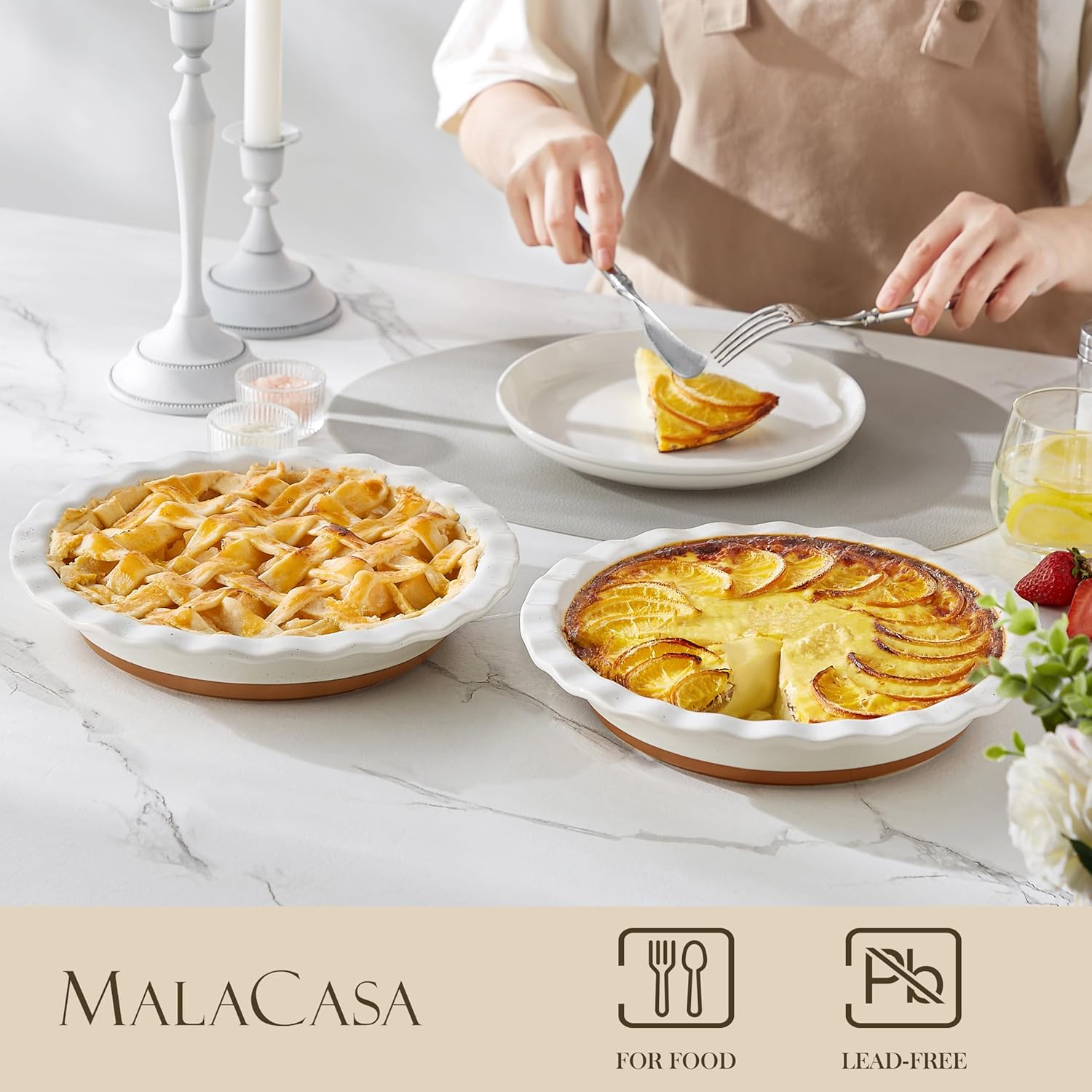
MALACASA Ceramic Pie Pan Set of 2-9 Inch Quiche Baking Dish Nonstick Pie Plate, Deep Dish Scratch-Resistant Pie Pan for Apple Pie Pot Pie, Series TARA

Apple Peeler Corer Slicer

Spring Chef Dough Blender & Pastry Cutter Tool, Stainless Steel Pastry Blender & Bench Scraper for Pizza, Nut, Pie - Multipurpose Dough Cutter & Scraper Tool for Baking with Soft Grip Handles - Black

The Four and Twenty Blackbirds Pie Book
As an Amazon Associate, From Scratch earns from qualifying purchases.
Every meal has a story.
New episodes, 2,000-word food histories, and tested recipes delivered to your inbox. Free forever.
No spam. Unsubscribe anytime.
From Scratch by Alex Deyo