
The TRUE Story of Apple Butter | America's Forgotten Survival Food
The TRUE Story of Apple Butter | America's Forgotten Survival Food
30 min
Prep
10h
Bake
48
Makes
- 5 lbs tart apples (Granny Smith, Cortland, or Jonathan)
peeled, cored, roughly chopped
- 2 cups granulated sugar
can reduce to 1.5 cups for a less sweet result
- 1/2 cup brown sugar
- 2 tbsp apple cider vinegar
brightens flavor and aids preservation
- 2 tsp ground cinnamon
- 1/4 tsp ground cloves
- 1/4 tsp ground allspice
- 1/4 tsp salt
- 1 tsp vanilla extract
add at the end only
- 1
Combine apples, both sugars, vinegar, cinnamon, cloves, allspice, and salt in a slow cooker. Stir to combine.
- 2
Cook on HIGH for 1 hour, then reduce to LOW and cook for 8-10 hours, stirring once or twice if you can. The apples will cook down dramatically.
- 3
When the apples are completely soft and very dark, use an immersion blender to puree until completely smooth. Alternatively, transfer to a blender in batches.
- 4
If the apple butter is thinner than you want, prop the slow cooker lid open slightly and cook on HIGH for another 1-2 hours to reduce. It should mound on a spoon without running.
- 5
Stir in vanilla extract. Taste and adjust spices.
- 6
Transfer to clean jars. Apple butter keeps refrigerated for 3 weeks, or can be water-bath canned for shelf-stable storage (process 10 minutes for half-pints).
Baker's Notes
The color is your guide — proper apple butter is a very deep reddish-brown, almost mahogany. If it looks orange, it needs more time. The long cook is what creates the caramelization that defines the flavor. Taste for spice balance before jarring.
Original: Pennsylvania German traditional apple butter, slow cooker adaptation, 1750
Apple Butter: The Preservation Method That Became a Tradition
Apple butter is not butter. It contains no dairy, no fat beyond what naturally occurs in fruit, and no ingredient that a modern shopper would find surprising. It is apples, cooked down so slowly and so completely that they transform from fruit into something dark, thick, and intensely concentrated — a kind of time-compressed essence of orchard that can be spread on bread and kept for months without refrigeration.
The name "butter" refers to its texture and spreadability, a naming convention common to fruit preserves in 18th century American and European cooking. Apple butter, pear butter, plum butter — these were all thick fruit pastes distinguished from jam by their extremely long cook times and complete breakdown of fruit structure.
The Preservation Logic
Before refrigeration, keeping food through winter was one of the central challenges of American domestic life. A family that failed to preserve enough food in fall would face genuine hunger in January. The orchard was a critical resource, and nothing from it could be wasted.
Fresh apples keep reasonably well in a cool cellar, but not forever. Cider ferments quickly. The solution to the apple surplus problem was to cook it down to a concentrate so thick and acidic that bacteria could not survive in it. Apple butter, sealed in a crock or jar, could last through an entire winter and into the next spring.
The process required two things: an enormous quantity of apples and a very large pot. Apple butter cook-downs were communal events — neighbors gathered with their apple harvests in late October or November, built fires under massive copper kettles, and stirred continuously for hours or an entire day. The work was social as much as practical, and the apple butter making became one of the defining autumn traditions of frontier American community life, particularly in Pennsylvania, Virginia, and the Appalachian regions.
The Pennsylvania German Tradition
The most developed apple butter tradition in early America belonged to the Pennsylvania German (Pennsylvania Dutch) communities — immigrants from Germany and Switzerland who settled in southeastern Pennsylvania in the 17th and 18th centuries. These communities had well-developed fruit preservation traditions from their European homelands and found in Pennsylvania an apple-growing climate that rivaled anything they had known.
Pennsylvania German apple butter — Lattwarick in the Pennsylvania Dutch dialect — was made in large copper or iron kettles called apple butter pots, some holding 30 or 40 gallons. A community apple butter making was called a Schnitz un Knepp day (schnitz refers to dried apple slices, knepp to dumplings), and the gathering involved peeling, coring, cooking, stirring, and socializing from before dawn until after dark.
The copper kettle was critical: copper conducts heat evenly and doesn't impart metallic flavors to acidic fruit. The long stirring paddle — sometimes a specialized wooden paddle with holes — kept the thick paste from scorching on the bottom as it reduced.
What Happens Chemically
The long cook time of apple butter does several things that quick cooking cannot replicate. As the moisture evaporates, the natural sugars caramelize — the same Maillard reaction that browns bread also transforms apples, creating flavor compounds that don't exist in fresh fruit. The pectin in the apples breaks down and then reconcentrates, creating a texture that is neither jam nor sauce but something between them. The spices — typically cinnamon, cloves, and sometimes allspice — cook into the apple mass until they're inseparable from it.
A jar of well-made apple butter is, in effect, twenty pounds of apples reduced to two. The labor and the apples are compressed into a small container that smells, faintly, like October.
The Modern Version
Making apple butter at home today requires either a day on the stovetop (stirring frequently) or a slow cooker (minimal attention, 10 hours). The slow cooker version is not historically authentic but produces a genuinely excellent result. The only non-negotiable is time — there is no shortcut to concentration.
Primary Sources
- –William Woys Weaver. “Pennsylvania Dutch Country Cooking” (1993)
- –Janet Greene, Ruth Hertzberg, and Beatrice Vaughan. “Putting Food By” (1973)
- –Andrew F. Smith. “The Oxford Companion to American Food and Drink” (2007)
You just learned the history.
Now make it From Scratch.
Every dish I document, I cook. Below are the exact tools, cookware, and ingredients I used to bring this recipe to life — sourced, tested, and trusted. No guesswork.
The full recipe, 2,000-word history essay, step-by-step photos, and a printable PDF are all waiting for you at alexanderdeyo.com/from-scratch. When you shop through these links, you support the series at no extra cost.
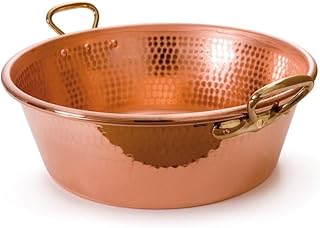
Copper Jam & Preserving Pan

Ball Mason Jars (Wide Mouth, Case of 12)

Slow Cooker Crock Pot (6 Qt)

Water Bath Canning Kit
As an Amazon Associate, From Scratch earns from qualifying purchases.
Every meal has a story.
New episodes, 2,000-word food histories, and tested recipes delivered to your inbox. Free forever.
No spam. Unsubscribe anytime.
From Scratch by Alex Deyo